
Saudi Arabia asks UN to protect Hormuz, Bab el-Mandeb and the Red Sea
Foreign Minister Prince Faisal bin Farhan Al Saud told the UN General Assembly that the kingdom rejects the use of vital waterways as a tool of pressure.
Al Jazeera reported that Iran's Foreign Minister Abbas Araghchi said on 27 September, via the state broadcaster IRIB, that "our conditions are clear, and any move toward reopening the Strait of Hormuz is contingent upon these conditions being fulfilled. We will not back down from them." President Trump on Saturday rejected Araghchi's seven-day roadmap — releasing frozen Iranian funds, lifting oil sanctions and ending the naval blockade of Iranian ports — saying the proposal "would not be acceptable". Iran closed the Strait of Hormuz on 28 February.
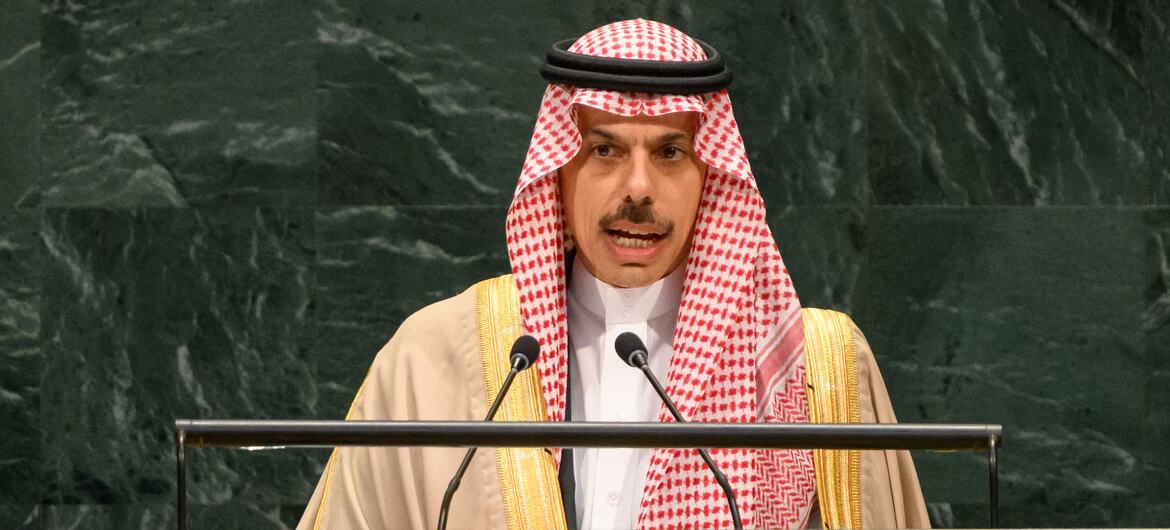
Saudi Foreign Minister Prince Faisal bin Farhan Al Saud told the UN General Assembly on 26 September that freedom of navigation must be ensured in the Strait of Hormuz, the Bab el-Mandeb Strait, the Red Sea and the Gulf of Aden. He said Saudi Arabia rejects the use of these waterways by any party as a tool of pressure or threat, and that conditions in the Strait of Hormuz should return to what they were before 28 February, without any fees or restrictions.
Saudi Foreign Minister Prince Faisal bin Farhan Al Saud, addressing the 81st session of the UN General Assembly on 26 September, called for freedom of navigation to be ensured in the Strait of Hormuz, the Bab el-Mandeb Strait, the Red Sea and the Gulf of Aden. He said Saudi Arabia rejects the use of these vital waterways by any party as a tool to exert pressure, issue threats or harm the interests of states. He said conditions in the Strait of Hormuz should return to what they were before 28 February, without the imposition of any fees or restrictions, and stressed that the Gulf is directly linked to global energy security, the continuity of international trade and the resilience of supply chains.
