
Ethiopia's rights commission says the right to life and personal security have fallen into an alarming state; its chief commissioner calls the northern violence a localised clash, not a full-scale war
The commission's fifth annual report, covering June 2025 to June 2026, records mass detentions in Amhara including of suspected Fano cells, enforced disappearances in three regions, and abductions for ransom.
Borkena said the same fifth annual report found that state security forces in Oromia extrajudicially executed civilians accused of giving intelligence or logistical support to rebel forces, and that armed groups killed 22 civilians in Abe Dongoro woreda in Horo Guduru Wollega. It said the report also recorded civilian deaths from clashes involving the Oromo Liberation Army and Fano in East Wollega and Guji. Natna News found no government response to those findings.
Chief Commissioner Berhanu Adello, briefing journalists, described the violence in northern Ethiopia as a localised clash rather than a full-scale war, and played down reports of forced conscription.
The Ethiopian Human Rights Commission released its fifth annual human rights situation report on Friday, covering June 2025 to June 2026. It said the right to life and personal security have fallen into an alarming state, and that mass detentions continue in conflict-affected areas, including of people suspected of belonging to Fano cells in Amhara.
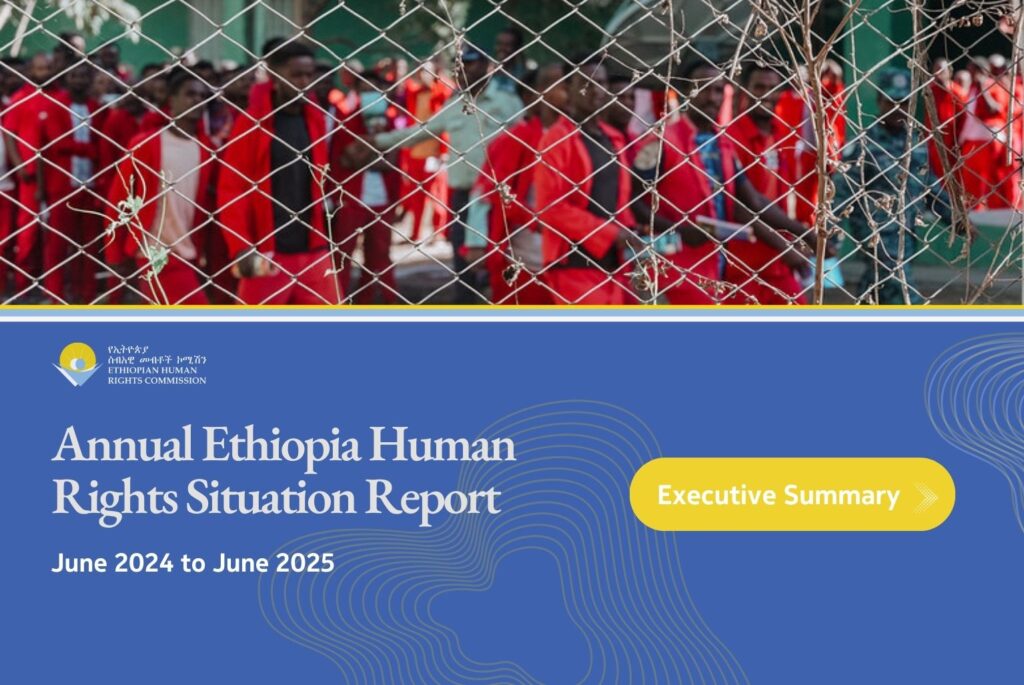
The Ethiopian Human Rights Commission said on Friday that the right to life and personal security in Ethiopia have fallen into an alarming state, as it released its fifth annual human rights situation report covering June 2025 to June 2026. Chief Commissioner Berhanu Adello, briefing journalists, said persistent armed conflict and breakdowns in security had caused widespread civilian casualties, with children, women, older people and people with disabilities caught in the fighting. The commission said mass detentions continue in conflict-affected areas, including of people suspected of belonging to Fano cells in Amhara, and that it had documented enforced disappearances in Amhara, South Ethiopia and Oromia, together with prolonged pre-trial detention, arrests without warrants and failure to comply with court orders for release. It said armed groups and criminal gangs abduct civilians for ransom and kill them when it is not paid, naming Amhara, Benishangul-Gumuz, Gambella and Oromia, and that fighting had cut many children off from education in Amhara, Benishangul-Gumuz, Somali, Oromia, South Ethiopia and Tigray. The report also covered clashes between government forces and the Oromo Liberation Army in Oromia and retaliatory attacks on civilians. Berhanu described the violence in northern Ethiopia as a localised clash rather than a full-scale war, and played down reports of forced conscription. The report was carried by The Reporter.
This story is also available in:
ትግርኛ