
Sisi hosts a four-way meeting at New Alamein with Isaias, al-Burhan and Somalia's Hassan Sheikh Mohamud
Egypt's presidency says the four leaders met to co-ordinate and consult on regional issues; The National reports they were expected to widen military co-operation.
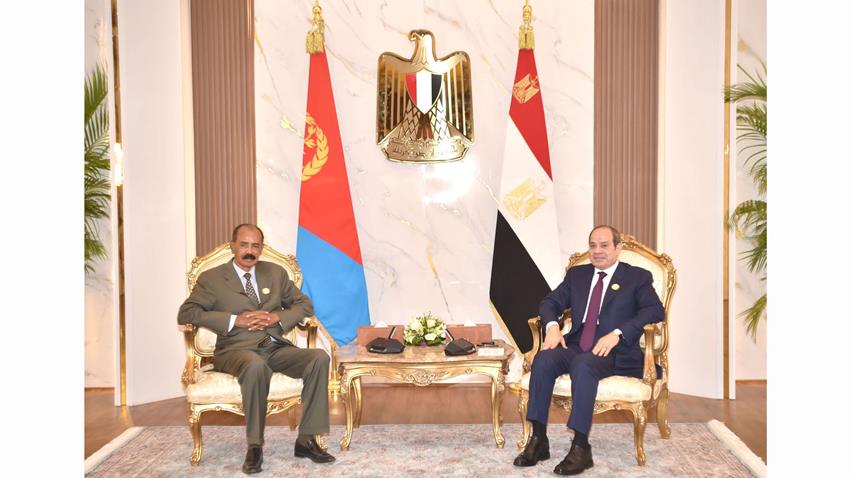
Eritrea's Ministry of Information said President Isaias Afwerki met Somalia's President Hassan Sheikh Mohamud at El Alamein and that the two stressed the need to consolidate a political climate that rejects external agendas of interference, in order to safeguard Somalia's stability and territorial integrity. The ministry said Isaias told the meeting that federal governance structures in the region had often disappointed citizens' expectations, and should give way to frameworks based on citizenship rather than ones that polarise socio-economic, religious and ethnic differences. It said Hassan Sheikh Mohamud thanked Eritrea for its support for the Somali government and people.
Ethiopia's Ministry of Foreign Affairs said on Monday that political rhetoric, coercive measures and acts of destabilisation cannot alter the geographic and historical realities surrounding the Abay river and the Red Sea. Fana Broadcasting Corporate said the statement followed Sunday's joint declaration by Egypt, Sudan, Eritrea and Somalia, and that the ministry rejected the position that downstream countries must approve dam projects. The ministry said the Abay contributes about 85 percent of the Nile's total flow, and that any serious discussion of regional maritime affairs and the security architecture must account for Ethiopia's legitimate interests and its enduring connection to the Red Sea. The statement did not name Egypt, Eritrea, Sudan or Somalia.
Egypt, Sudan, Eritrea and Somalia issued the El-Alamein Joint Declaration after Sunday's four-way summit, affirming freedom of navigation and that the governance and security of the Red Sea are the exclusive responsibility of its littoral states, including the Gulf of Aden and Bab al-Mandab. On the Nile the four rejected any unilateral measures that adversely affect the existing water uses of the downstream countries, backed the sovereignty and territorial integrity of Sudan and Somalia, rejected the recognition of Somaliland, and agreed to establish a mechanism to follow up on the summit's outcomes, to meet periodically. The declaration does not name Ethiopia, and there was no Ethiopian government response at the time of writing.
Xinhua reported that el-Sisi told the Alamein gatherings it was no longer enough for African states to co-ordinate positions and that their capabilities must be integrated. The National, citing unnamed sources, said the four leaders agreed to broaden military co-operation to protect Red Sea shipping; not independently verified.
Egypt's presidency said el-Sisi hosted a four-way meeting at New Alamein on Sunday with Isaias Afwerki, General al-Burhan and Hassan Sheikh Mohamud, held to co-ordinate and consult on regional issues. The National, citing unnamed sources, said the leaders were expected to announce steps to widen military co-operation, including on Red Sea shipping.
Egypt's presidency said President Abdel Fattah el-Sisi hosted a four-way meeting at New Alamein on Sunday with Eritrea's President Isaias Afwerki, the head of Sudan's Sovereign Council General Abdel Fattah al-Burhan and Somalia's President Hassan Sheikh Mohamud. The presidency said the meeting was held to co-ordinate and consult on regional issues of interest to the four countries. The National reported, citing sources it did not name, that the leaders were expected to announce steps to widen military co-operation, including on the protection of Red Sea shipping; that could not be independently verified. AFP reported that the leaders met on the sidelines of the Alamein Africa Business Forum as Ethiopian federal forces took control of Mekelle. Ethiopia accuses Eritrea, Sudan and Egypt of backing the Tigray forces; all three deny it.